Since 2016 the IRMG has awarded an Early Career Award (previously called Young Investigator’s Award) each year to recognise the exceptional contribution to the field by an independent academic researcher at an early career stage. Details for the nomination process can be found on the Information and Links page.
2023 Winner
Dr Andrew Jupp, University of Birmingham

The Jupp group work in the areas of main-group chemistry, small-molecule activation and sustainable catalysis. Recent work has focused on exploring the interactions of frustrated Lewis pairs (FLPs) with light, and understanding the implications of these findings on the mechanism of small-molecule activation by FLPs. In particular, we have used supramolecular techniques to probe the encounter complex (the weakly associated Lewis acid and base) in solution, which underpins FLP catalysis.
2022 Winner
Dr Sebastian Pike, University of Warwick
2021 Winner
Dr David Nelson, University of Strathclyde
2020 Winner
Dr Claire McMullin, University of Bath
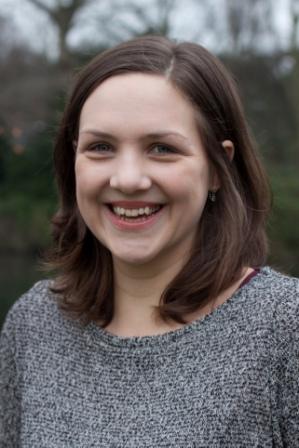
As a computational Chemist, Claire uses predominately Density Functional Theory (DFT) methods to investigate a range of organometallic and inorganic reaction systems. Through collaborations with a range of synthetic groups, her research has studied mechanisms for Rh and Ru C-H activation, Pd cross-coupling of aryl halides, Buchwald-Hartwig amination, the nucelophilicity and reactivity of group 2 boryl complexes, emerging alumanyl reactivity and much more.
2019 Winner
Dr Ruth Webster, University of Bath

My research spans the fields of organic, organometallic and coordination chemistry with a specific focus on iron-catalysed main group bond transformations and catalytic manipulation of phosphines. We are a synthetic methodology group, but use a range of physical organic techniques to probe mechanism. We also collaborate with experts in advanced spectroscopies and theoreticians to gain greater understanding of our chemistry.
2018 Winner
Dr Ulrich Hintermair, University of Bath
2017 Winner
Dr James Walton, Durham University

Research projects in the Walton group are linked through the design, synthesis and evaluation of organometallic complexes. One project is the study of Ru(η6-arene)Ln complexes in synthesis and catalysis. We have shown that π–coordination of arenes to Ru increases their reactivity towards SNAr, C–H activation and trifluoromethylation. However, the Ru–(η6-arene) bond is strong and a stoichiometric amount of Ru is required. Our goal is to develop systems in which the rate of arene dissociation/exchange is matched with the rate of arene reactivity, leading to a catalytic cycle. By understanding the mechanism of arene exchange in these systems, we can lower the activation barrier for dissociation through judicious choice of ligands, Ln, and incorporation of tethers. Our recent review on this area can be read here.
2016 Winner
Dr Sara Kyne, University of Lincoln
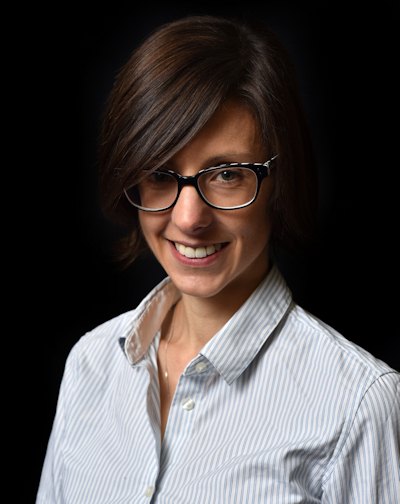
The goal of research in the Kyne group is to develop sustainable catalytic processes. To achieve this, we focus on elucidating the underpinning mechanistic details of these reactions to guide optimisation of activity and efficiency. We use a variety of spectroscopic and electrochemical techniques, in synergy with computational modelling.
 Inorganic Reaction Mechanisms Group